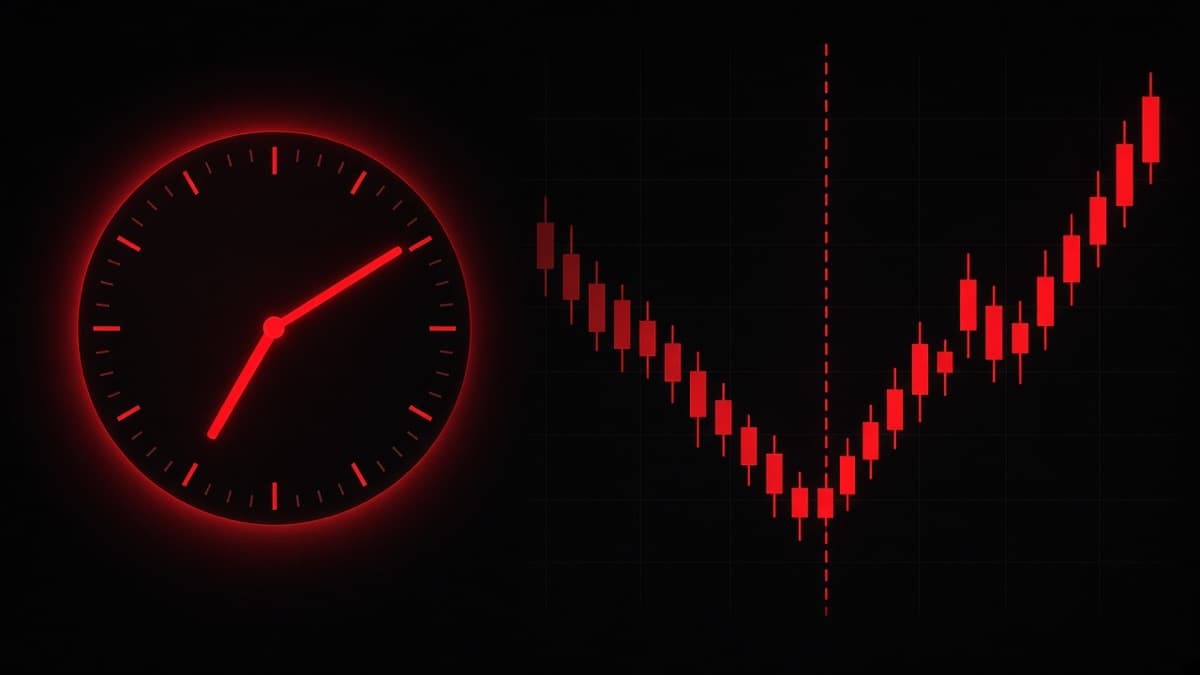
What Is Binary Trading? Fixed-Time Trades Explained
Binary trading explained properly: how fixed-time trades settle, how payout sets your break-even win rate, and why most beginners lose money on short expiries.
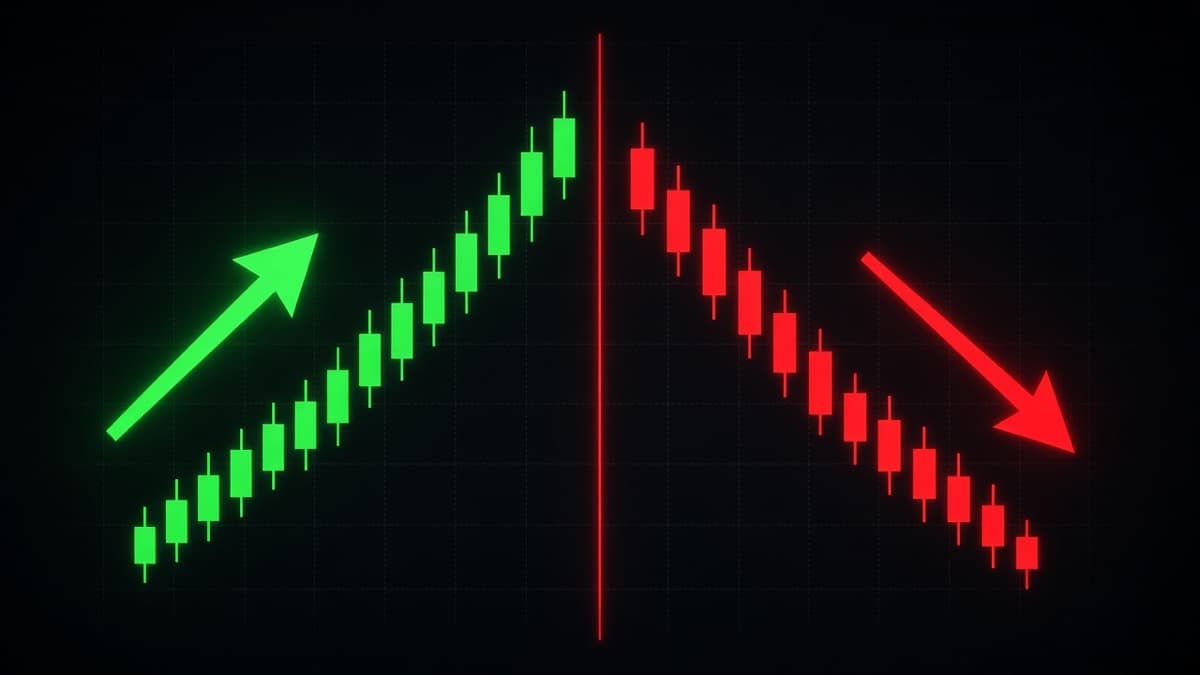
A binary trade is a bet on direction inside a fixed window of time. You pick a pair, pick UP or DOWN, pick how long the trade lasts, and put up a stake. When the clock hits zero the platform compares the price at that moment against your entry price. Right side, you get the stake back plus a fixed payout. Wrong side, the stake is gone.
There is no partial win. One pip in your favour pays exactly the same as forty pips. That single rule is what makes binary trading different from everything else, and it is the rule most new traders never fully think through before they fund an account.
Look at what that chart is saying. Price was above the entry for three of the four candles in the window. In spot forex you would have been in profit that whole time and you could have taken it. In a fixed-time trade none of it counted, because the only price that settles the trade is the one printing when the timer reaches zero.
What is a binary or fixed-time trade?
Strip the marketing away and a fixed-time trade has four inputs and one output.
- The pair. EUR/USD, GBP/JPY, USD/CAD, or an OTC version of one of those.
- The direction. UP means you expect the settlement price to be above your entry price. DOWN means below.
- The expiry. The clock. 30 seconds, 1 minute, 5 minutes, 15 minutes, an hour, sometimes longer.
- The stake. The cash you are risking. All of it is at risk, not a fraction of it.
The output is one of three results: win, loss, or a refund if the settlement price is exactly your entry price. Nothing else can happen. You cannot be half right. You cannot move a stop loss to break even. You cannot let a winner run.
Because the shape of the outcome is that simple, everything that matters gets squeezed into two decisions: which direction, and over what clock. People spend all their energy on the first one. The second one quietly decides most of their results, which is why it gets a whole article of its own in binary options expiry times explained.
The word binary just means two outcomes
The name comes from the payoff, not from any special market. There is no separate binary market where prices are invented. The price feed under a fixed-time trade on EUR/USD is the same foreign exchange market that spot traders, banks and funds trade. The contract wrapped around that price is what changes.
OTC pairs are a different case and worth separating out early. OTC stands for over the counter, and those instruments are quoted by the platform itself, which is how they stay open at the weekend when the interbank market is closed. The charts still show real quoted prices from that platform's feed, and they still form structure you can read, but they are not the same instrument as the exchange traded pair. If you want the difference laid out properly, read Quotex trading guide.
How does the payout actually work?
The payout is a percentage of your stake that gets added if you win. If your stake is $10 and the payout shown is 85 percent, a win returns $18.50 in total: your $10 back plus $8.50 profit. A loss returns nothing.
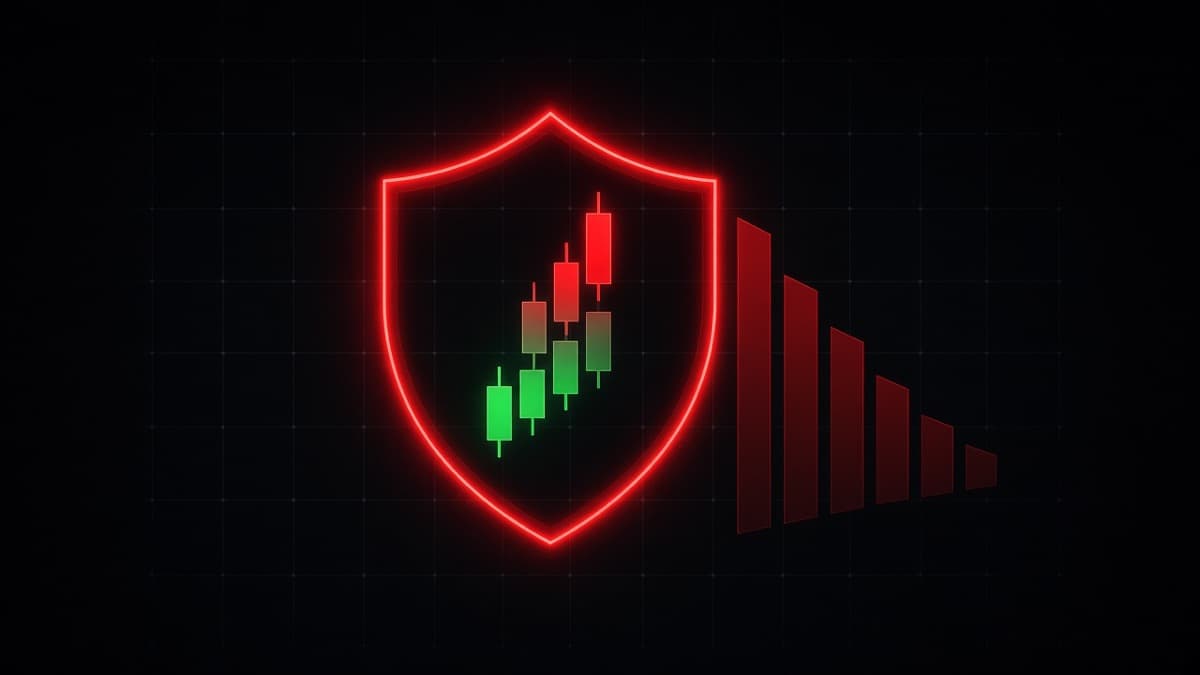
That step shape is where the platform's edge lives. Notice the asymmetry: a win pays you 85 percent of the stake and a loss takes 100 percent of it. The market does not care about that gap. You have to beat it.
The break-even win rate you never see advertised
Here is the arithmetic every fixed-time trader should be able to do in their head. Call your win rate w and the payout p, written as a decimal. Over a long run of equal stakes, you break even when what the wins pay equals what the losses cost:
w x p = (1 - w) x 1
Rearranged, w = 1 / (1 + p). That is the whole formula. Run it on a few payouts:
| Payout shown | Break-even win rate | Working |
|---|---|---|
| 90% | 52.6% | 1 / 1.90 |
| 85% | 54.1% | 1 / 1.85 |
| 80% | 55.6% | 1 / 1.80 |
| 75% | 57.1% | 1 / 1.75 |
| 70% | 58.8% | 1 / 1.70 |
| 60% | 62.5% | 1 / 1.60 |
| 50% | 66.7% | 1 / 1.50 |
Payouts change by pair, by expiry, by session and by platform, so do not take any of these rows as a claim about what a specific broker is paying today. Read the number off your own screen and put it into 1 / (1 + p) before you take the trade.
Two things fall out of that table. First, a 50 percent win rate is a losing strategy at every payout below 100 percent. Not break even, losing. Second, small payout differences matter more than they look. Moving from 85 percent to 75 percent adds three full percentage points to the win rate you need, and three points of win rate is a serious amount of skill.
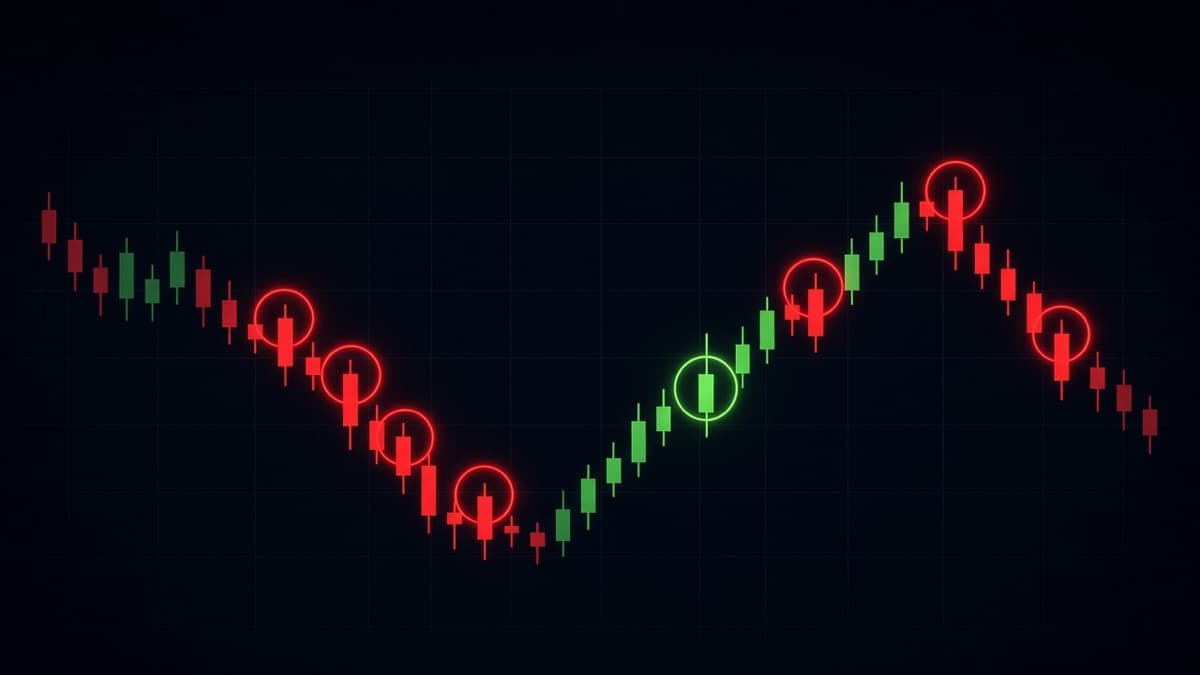
That chart is the part beginners never see coming. The path peaked at $115.50. At trade four this trader would have felt like they had a system. By trade twenty the same trader is $15 down having won exactly half of their trades. Nothing went wrong. The maths simply did what it always does.
What a refund means
If settlement lands exactly on your entry price, most platforms return the stake. It sounds like a footnote and it is, but it explains a design detail on the REDBERRY desk: after a signal you report WIN, LOSS or REFUND, because a two-button report would force you to log a tie as something it was not. Ties are rare on a five decimal pair. They are less rare on a one minute expiry in a dead session where price is barely moving.
What does one trade look like from click to settlement?
Numbers make this concrete. Say the balance is $400, the payout on the screen for EUR/USD at a 5 minute expiry is 85 percent, and the rule is 2 percent per trade, so the stake is $8.
The setup: price has tapped 1.0842 twice in the London morning and both times sellers took it straight back down. The third tap prints a candle with a long upper wick and a close near its low. You take DOWN with a 5 minute expiry while price is at 1.0840.
Five minutes later, one of three things is true.
- Settlement at 1.0831. You were on the right side. The platform returns $8 plus $6.80 profit, balance $406.80.
- Settlement at 1.0844. Wrong side. The $8 is gone, balance $392.
- Settlement at exactly 1.0840. Tie, stake refunded, balance $400.
Now the part that matters. In the winning case you were right by 9 pips. Had price collapsed 40 pips instead, the payout would still have been $6.80. The market being violently in your favour pays the same as it being barely in your favour. That cuts both ways: you do not need a big move, you need the right side of one line at one moment. It also means you should never hold a losing position hoping for a bigger move, because there is no bigger move to be paid for.
What goes in the journal is the whole row, not the result: EUR/USD, 09:40 London, 5m, DOWN, third rejection of 1.0842 with an upper wick, win, 85 percent payout. Fifty rows like that tell you something. Fifty results on their own tell you nothing.
Why does expiry decide more than direction?
Because direction is a statement about the market and expiry is a statement about the market and the clock. A read can be completely correct about what happens next and still settle on the wrong side of the entry line.
The trader in that chart was right. Price did go up. It went up hard. But the first candle after entry went against the position, so a one minute expiry settled at a loss while a five minute expiry collected. Neither trader had better analysis. One matched the clock to the time the move needed, the other did not.
This is why you cannot separate a signal from its expiry. A signal that says UP on EUR/USD is incomplete. UP for how long is the actual trade. On the REDBERRY desk the Live tab is always a 1 minute call on 17 FX pairs, so the answer is fixed and you know exactly what you are being told. On the OTC tabs you choose the timeframe yourself, which means you also own the consequences of choosing it badly.
What does the chart actually have to tell you?
A fixed-time trade needs a read that resolves inside a known number of candles. That narrows down what is useful on the chart.
Start with the candle itself, because a fixed-time trade is basically a bet on the next few candle closes. A candle with a long upper wick and a small body near its low is telling you that buyers pushed and lost the whole push before the close. That is information you can use for the next 60 seconds. A pattern like that is worth knowing properly, and there is a full breakdown in the candlestick patterns complete guide along with individual pieces such as hammer and shooting star.
Then levels.
Levels matter in fixed-time trading for a specific reason: they give the move somewhere to go and a reason to happen now. A DOWN trade taken into the third rejection of a level that has already held twice is a different trade from a DOWN taken in the middle of an empty range, even if both charts are red at the moment you click. The first has a trigger. The second has a mood.
What is much less useful is anything that needs a long time to be right. A weekly view on the dollar is a fine opinion and a terrible input for a 1 minute trade. If your reason for taking UP is a story about interest rates, your expiry needs to be measured in weeks, and fixed-time products are not built for that.
How is binary trading different from spot forex?
They share charts, pairs and sessions. Almost nothing else transfers directly.
| Spot forex | Fixed-time trade | |
|---|---|---|
| Exit | You choose it | Fixed when you enter |
| Result size | Depends on how far price moves | One fixed payout |
| Risk per trade | Distance to your stop loss | The whole stake |
| Stop loss | You set one | Does not exist |
| Partial profit | You can scale out | All or nothing |
| Being early | Survivable if the stop is wide | Usually fatal |
| What kills accounts | Leverage and wide stops | Stake size and short clocks |
The most important row is the third one. In spot forex, risking 1 percent of the account does not mean putting 1 percent of the account into the trade. Position size and risk are separate things, because the stop loss defines the loss. In fixed-time trading they are the same thing. If you stake 5 percent of your balance, you are risking 5 percent, full stop. Losing runs are not soft.
That is why a spot trader who moves across and keeps the same habits gets hurt. They are used to a losing trade costing less than the full position. Here it costs all of it, every time.
The other row worth sitting with is being early. In spot, a good read with bad timing often survives, because the position stays open while the market makes up its mind. In fixed-time trading there is no waiting. The clock is part of the contract. If you come from spot, read forex trading for beginners alongside this to keep the two models clearly separated in your head.
Who loses money in binary trading, and why?
Not the people who pick the wrong direction slightly more often than the right one. The people who lose their accounts almost always lose to structure, not to analysis. Four causes cover most of it.
Stakes that cannot survive a normal losing run
Six losses in a row is not unusual. If your win rate is 55 percent, the chance of losing six in a row starting from any given trade is 0.45 to the power of 6, which is 0.0083, or about 1 in 120. Over a couple of hundred trades that will happen to you. Now put stake sizes against it:
| Stake as % of balance | Balance left after 6 straight losses |
|---|---|
| 1% | 94.1% |
| 2% | 88.6% |
| 5% | 73.5% |
| 10% | 53.1% |
| 20% | 26.2% |
| 25% | 17.8% |
Those are compounding numbers, each loss taken on the reduced balance. At 2 percent the losing run is an annoyance. At 20 percent it is close to fatal, because getting back from 26 percent of your starting balance needs a 282 percent gain. The full version of this maths, including why doubling after a loss does not fix it, is in risk management for binary trading.
Expiries chosen for speed instead of for the setup
The 30 second button is right next to the 5 minute button and it feels more exciting. It is also the one clock where noise is bigger than almost any signal you can read. Traders end up taking a 5 minute read and settling it in 30 seconds, then concluding their analysis is broken when the clock was the problem.
The recovery ladder
After two or three losses, stake size starts climbing to get the money back. The maths of that ladder is brutal and specific, and it is worth knowing before you ever try it: at an 85 percent payout, doubling stops covering the sequence at the third step. That is not an opinion, it is arithmetic, and it is worked through fully in the risk article.
Trading a market that is not moving
The payout does not drop when the market goes quiet, but your edge does. In the lull between the London close and the New York open, EUR/USD can sit in a three pip box for half an hour. Every 1 minute candle in that box is a small body with wicks on both sides, which is the chart telling you plainly that neither side is in control. Taking fixed-time calls in there is paying a 54 percent break-even for a coin flip.
The same trap catches people on quiet weekend OTC sessions, where the boredom is worse and the clicking is faster. Screen time is not the same thing as opportunity. Two decent setups in a two hour session is a normal count, and the hours where nothing sets up are part of the job.
No record of anything
Most people who have been losing for six months cannot tell you their win rate by pair, by session or by expiry. They have a feeling. Feelings are not data, and without data there is nothing to fix. A journal is the cheapest edge available in this game, and trading psychology and discipline covers how to keep one that you will actually use.
What about OTC pairs and weekends?
OTC instruments exist because the exchange traded currency market closes at the weekend and the platforms want a market that stays open. They quote OTC pairs themselves, from their own feed. Two practical consequences:
- The structure is readable but it belongs to that feed. Do not expect your Monday EUR/USD level to be respected by EUR/USD OTC on Sunday.
- Pair names tell you which one you are on. Quotex writes it as EUR/USD (OTC). If the name has OTC in it, you are on the platform feed.
REDBERRY handles the two feeds separately for exactly this reason. The Live tab reads the TradingView API for realtime price and chart structure on 17 FX pairs and always calls the next 1 minute. The OTC tabs use private Quotex API access for a live OTC price feed, with the same inbuilt strategies applied to whichever pair and timeframe you select. Same strategies, different feed, different session behaviour. There is more detail in how REDBERRY generates live and OTC signals.
What does a sane first month look like?
Not profitable. Boring. Here is the version that keeps you in the game long enough to find out whether you can read a chart.
- Pick two pairs and one session. EUR/USD and GBP/USD during London is plenty. More pairs means more screens and worse decisions.
- Pick one expiry and leave it alone for the month. If you are taking 1 minute calls, take 1 minute calls.
- Fix the stake at 1 to 2 percent of the balance. Write the cash number on paper so you cannot renegotiate it mid session.
- Cap the day. Three losses, or six percent down, and you are finished until tomorrow. No exceptions on the first month.
- Log every trade: pair, time, expiry, direction, the reason in five words, result, payout percent.
- At the end of the month, work out your win rate and compare it with 1 / (1 + p) using your average payout.
That last step is the whole point. After a month you will have a real number instead of a feeling, and the number tells you what to change. If your win rate is 49 percent, no staking scheme will save you and the fix is in your reading. If it is 58 percent and the account is still down, the problem is sizing or discipline, and those are easier to fix than analysis.
Is binary trading a scam?
The structure is not a trick. A fixed payoff on a fixed clock is a clearly defined contract and the payout is written on the screen before you click. What gets people is that the structure is unforgiving in ways that feel invisible while you are winning: the payout asymmetry, the full stake at risk, and the clock as a hidden second decision.
What is worth being blunt about is the promise layer around it. Anyone guaranteeing a win rate, selling a bot that never loses, or showing you an account curve that only goes up is selling you something that does not exist. Nobody has a guaranteed read on the next candle. REDBERRY is explicit about that: signals are not 100 percent accurate. That is a different statement from calling them guesswork, which they are not: Live reads the TradingView API for realtime price and chart structure, OTC reads a private Quotex feed, and inbuilt strategies call the next move. The desk still gets calls wrong, which is exactly why the desk rules cap risk at 1 to 2 percent per signal.
If you want the plain version of what the desk is and is not, the about page says it in a paragraph: a non-profit informational desk, not a broker, no funds held, no trades placed.
The three numbers to memorise
Everything above compresses into three numbers you should be able to produce without a calculator.
- 1 / (1 + p). Your break-even win rate at the payout on your screen. At 85 percent, 54.1 percent.
- Your stake as a percent of balance. If it is above 2 percent, a normal losing run becomes an account event.
- The number of candles your read needs. Then pick the expiry that covers them, not the one that settles soonest.
Get those three right and you are trading a defined game with a known break-even point. Get them wrong and no amount of pattern study will help, because the account will not survive long enough for the patterns to matter. When you are ready for the next piece, common binary trading mistakes walks through the exact chart situations where each of these rules gets broken.
Questions people ask
Is binary trading the same as forex trading?
No. In spot forex your profit depends on how far price moves and you choose when to exit. In a binary or fixed-time trade the exit time is fixed when you enter, and the return is the same whether price moves one pip or forty pips in your favour. The two use the same charts and the same reading skills, but the money works in completely different ways.
What win rate do I need at an 85 percent payout?
About 54 percent. A win pays 0.85 of your stake and a loss costs 1.0, so you need w x 0.85 = (1 - w) x 1, which gives w = 1 / 1.85 = 0.5405. At a 70 percent payout it rises to 1 / 1.7 = 58.8 percent, and at 90 percent it falls to 1 / 1.9 = 52.6 percent. Always work the number out from the payout your own platform is showing before you take the trade.
What happens if the price finishes exactly at my entry price?
Most platforms treat an exact tie as a refund, so the stake comes back and nothing is won or lost. This is why REDBERRY asks for WIN, LOSS or REFUND after a desk signal instead of only two options. Check how your own platform words it, because the rule belongs to the broker, not to the strategy.
Can I close a binary trade before expiry?
Some platforms offer an early close on some instruments and some do not, and the price you get back is set by the platform. Do not build a plan around it. Assume the trade runs to expiry and pick the expiry accordingly.
Why do beginners lose money so fast on 30 second trades?
Two reasons stacked on top of each other. A 30 second window is usually smaller than normal market noise, so the direction at settlement is close to a coin flip, and the payout still needs roughly 54 percent winners. Coin flips at a 54 percent break-even bleed the account. Add stakes of 20 percent of the balance and the account is gone in a handful of losing runs.
Does REDBERRY place binary trades for me?
No. REDBERRY is a non-profit informational signal desk. It does not hold funds, does not place trades and is not a broker. Live pairs use the TradingView API for realtime price and chart structure, then inbuilt strategies predict the next move. OTC uses private Quotex API access for a live OTC price feed with the same strategies. You decide whether to take the call, what size to use and when to stop.
Nothing here is financial advice. Signals and setups can be wrong, so only risk money whose loss will not change your life.