Irani Bot vs Redberry AI Bot
An Irani Bot call is only usable if it names a window. This compares both tools on timeframe control, expiry fit and what each one documents about its feed.
An Irani Bot call that reads "EUR/USD UP" and nothing else is not yet a trade. Twenty people see a post like that: one takes a 15 second expiry, one takes a minute, one takes five minutes, and at least two of them lose while another two win on the identical call. Nothing about the market decided that. The missing window did, and that is the thing to sort out before comparing any signal tool with REDBERRY.
Why the window matters more than the direction
A binary trade has two variables and traders obsess over the wrong one. Direction gets all the attention. The window decides which part of the price path you get graded on, which is the half that turns a view into a result.
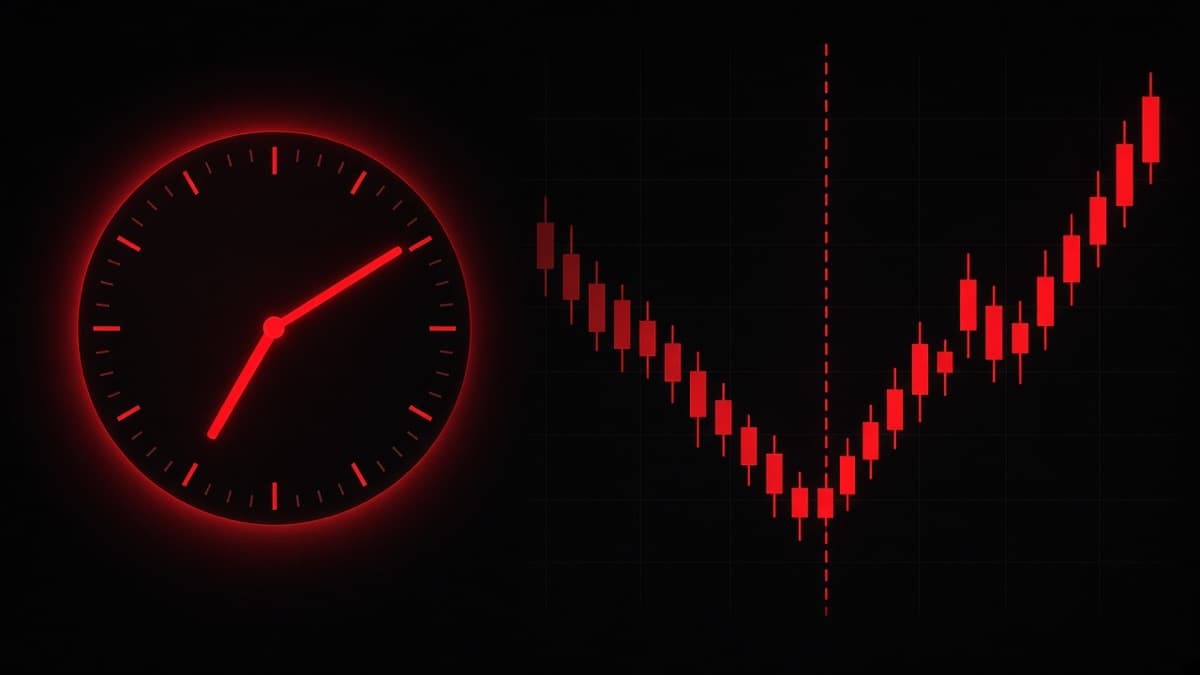
Look at that path. An UP call at the entry line is correct on a short window and wrong on a longer one, and the reasoning behind the call never changed. So a direction delivered without a window is not a trade instruction. It is at best a view about the next few minutes, and you are the one silently choosing the expiry.
That is the first thing to establish about any Irani Bot build you have been sent: what horizon is the call for? The supplier should be able to answer in seconds. If they cannot, you are guessing on both variables while believing you are guessing on one.
What an Irani Bot call needs before it is checkable
Four fields make a signal auditable. Anything less and you cannot build a record, which means you cannot tell a good tool from a lucky week.
- Pair. Written exactly, including whether it is the OTC book or the interbank pair. EUR/USD and EUR/USD (OTC) are different series.
- Direction. UP or DOWN, obviously.
- Window. The expiry the call is meant for, not the one you felt like using.
- Timestamp. The minute the call was produced, so you know which candle it read.
With those four you can settle every call after the fact and build a real win rate. Without the window and the timestamp, two people can argue about the same tool forever, because they are scoring different trades.
I have no public documentation for Irani Bot, so I cannot tell you whether it supplies those fields. Ask. It is a fair question and a supplier who takes it badly has answered it.
How REDBERRY ties one signal to one window
REDBERRY handles this by taking the choice out of the moment of panic.
On the Live tab you pick one of 17 FX pairs and the generate time is always 1m. There is no Live timeframe selector, which sounds like a limitation and works as a discipline: every Live call is about the next minute and nothing else. The feed is the TradingView API, supplying realtime price and chart structure, with inbuilt strategies reading it to predict the next move.
On the OTC tabs you tap a pair, it locks, you tap a timeframe, it locks, then you generate. The signal is for that pair on that timeframe and it lasts exactly as long as the window. When the window ends the result clears and you can generate again. The OTC price feed is private Quotex API access, with the same strategies.
Quotex OTC timeframes are 5s, 10s, 15s, 30s, 1m, 2m, 5m, 10m, 15m, 30m, 1h, 2h and 4h. The Quotex trading guide lays the list out.
Signals are not 100 percent accurate here either. What the fixed window does is make the record honest, because every call can be scored against exactly one candle.
Irani Bot vs Redberry AI Bot side by side
| Criterion | Irani Bot | Redberry AI Bot |
|---|---|---|
| Window attached to a call | Unknown, ask the supplier | Yes. Live fixed at 1m, OTC locked before generate |
| Timeframe range | No documented list | Quotex 5s to 4h |
| Pair naming | Unknown | Live pairs with a slash, OTC pairs marked OTC per platform |
| Price source | No public documentation I can find | TradingView API on Live, private Quotex API on OTC |
| Weekend cover | Unknown | OTC books stay open when the FX week is shut |
| Accuracy wording | Unknown | Not 100 percent, stated up front |
| Support | Unknown | contact@redberrybot.com |
Every "unknown" there is a question you can settle in one message to whoever gave you the tool. Their answer is more useful than this table.
One call, three windows, three different trades
Numbers make this concrete. Say a call says UP on GBP/USD and the price when you read it is 1.2740.
On a 15 second window you are asking whether the next few ticks print above 1.2740. Spread and one seller with size decide that. Structure has no time to matter.
On a 1 minute window you are asking whether the next candle closes above 1.2740. Now a level test can resolve, a sweep can reclaim, and the reasoning behind the call gets a chance to be right or wrong on its merits.
On a 5 minute window you are asking about a stretch that may contain a pullback deep enough to flip the result twice before it settles. That is a different question again, and it needs a different kind of read.
Same direction, same price, three trades. This is why the window has to come from the tool or from a rule you set in advance, never from whichever button your thumb reaches first.
When a call arrives late in a window
The second timing problem is smaller and costs just as much.
If you receive a direction with twelve seconds left on the current minute, you have two options and only one of them is sensible. Placing now means your entry price is wherever the candle has already dragged to, and you are graded on the remaining twelve seconds. Waiting for the next window means the call may be stale by the time you act on it.
The rule that works: if less than about a third of the window remains, skip. There is another call coming and there is no prize for taking every single one. On the REDBERRY desk this is easier than it sounds, because the signal lasts for the timeframe you locked and the result clears when the window ends, so you always know where you are in the cycle rather than guessing.
Matching a window to a setup, whichever tool you use
The expiry decision is yours regardless of which column you pick, so it is worth getting right.
Very short windows are not faster versions of longer ones. Over 5 or 15 seconds you are mostly measuring the spread and a handful of ticks, and structure has no time to play out. Over a minute a level test can actually resolve. Binary options expiry times explained works through how to match a window to a setup instead of to your impatience.
Two habits save more money than any tool choice. Enter at the start of a window rather than with fifteen seconds left on it, and skip when the pair is inside a flat band where no expiry helps. The second one is the harder discipline, and common binary trading mistakes has the rest of that list.
Which trader each one suits
If you are the sort who wants raw directional input and prefers to choose your own expiry from your own reading of the chart, a channel style tool can fit, as long as you accept that you own the window decision and you log it. Keep stakes at 1 to 2 percent while you test.
If you would rather have the pair and window fixed before the call appears, so the result is unambiguous and your log means something, the desk structure suits you better. That is what REDBERRY is built around, and About us explains the non-profit part and what the desk deliberately does not do.
Trying REDBERRY
Register through the Register button on the Quotex card, fund at least $100 in a Live account, submit the Trader ID (8 digits on Quotex), then save the 16 character key. The desk opens after a short rules card: Live account rather than the broker demo, 1 to 2 percent risk, one step of MTG.
Two limits to know. Under $10 in the Live balance ends the licence by itself, and a $50 deposit reactivates the same key once you are back above $10. One seat only, so a new device closes the old session. Both are in REDBERRY licence and seat rules.
Related reading from the same series: Japanese Bot vs Redberry AI Bot on tracing a call back to a candle, and Pakistani Bot vs Redberry AI Bot on shared files and account safety.
Questions people ask
What timeframes does Irani Bot give signals for?
I have no documented list for any Irani Bot build, so I cannot tell you. That is the question to put to whoever supplies it, because a direction without a window cannot be settled as right or wrong. If the answer is that you choose your own expiry after receiving the call, treat the call as an opinion about the current hour rather than about a specific candle.
Is Irani Bot suitable for 1 minute trades?
Only if it tells you the call is for the next one minute candle. A one minute window is decided by the first sixty seconds, so a direction produced for a longer horizon can be correct overall and still lose on that candle. Check what horizon a call is meant for before matching it to an expiry.
How does Redberry handle the expiry problem?
It removes the guesswork. On the Live tab the window is always 1m across 17 FX pairs, so every call is about the next minute. On the OTC tabs you lock a timeframe from the platform's own list before generating, and the signal lasts for exactly that timeframe. Quotex runs 5s to 4h.
Where does Redberry get its price data?
Live pairs come from the TradingView API, which supplies realtime price and chart structure, and inbuilt strategies then predict the next move. OTC comes from private Quotex API access as a live OTC price feed, with the same strategies. Signals are not 100 percent accurate, which the desk states rather than hides.
Can I use Irani Bot signals on a Quotex OTC pair?
You can place any trade you like on your own account, but check that the pair matches. Quotex writes OTC pairs as EUR/USD (OTC) and the OTC book is quoted by the platform, so a direction produced from a different price source is not necessarily about the same series you are trading. Match the source to the book or the test proves nothing.
Does Redberry place trades for me?
No. It prints UP or DOWN for the pair and window you selected, and you decide whether to trade, at what size, or to skip it. Redberry is a non-profit informational desk, it is not a broker, it holds no funds and it never asks for your broker login.
Nothing here is financial advice. Signals and setups can be wrong, so only risk money whose loss will not change your life.